Logo Besucherbergwerk Velsen
Where mining history lives on

Historic Velsen mine ensemble

In Velsen, the westernmost district of Saarbrücken, lies the disused Velsen coal mine with its unique training mine, the training gallery. The site has been operated as a visitor mine by Erlebnisbergwerk Velsen e.V. since 2011 and brings the world of Saarland coal mining to life. Original machines, roadways and shafts are not only available for viewing here - they are functional and are shown in operation. This creates an authentic impression of life and work underground that goes far beyond a mere exhibition.

How it all began

In 1899, the Rosselschacht was sunk - later known as Gustavschacht 1. It was the nucleus of the Velsen mine and marked the beginning of a long mining history. Over the decades, a large industrial complex developed here, which shaped life in the region and defined the image of the town.

The Velsen mine in its heyday

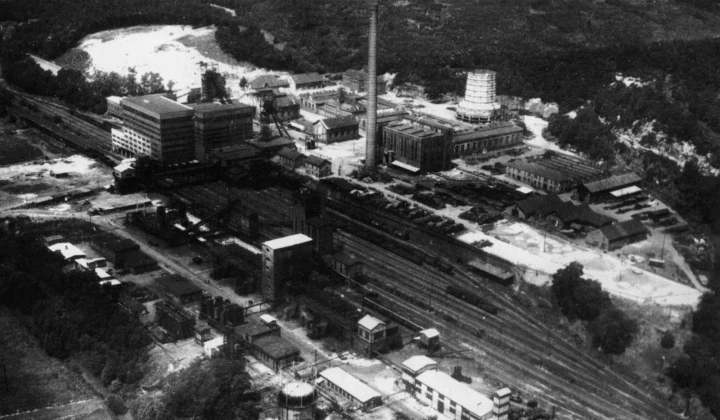
In its heyday, the plant consisted of

  • the Velsen coal mine with the main shafts Gustav I and Gustav II as well as several side shafts

  • the Velsen training mine (today an adventure mine)

  • the coal preparation plant

  • winding engine houses, steam engines, boiler house and cooling tower

  • administration building, washhouse and lamp room

  • the coffee kitchen

  • the coach house (former horse stables)

  • the electrical switch house

  • the smouldering plant for smouldering coke production

  • a mine station with a connection to the Rosseltal railway

  • a miners' settlement with apartments and dormitories

  • a passenger station

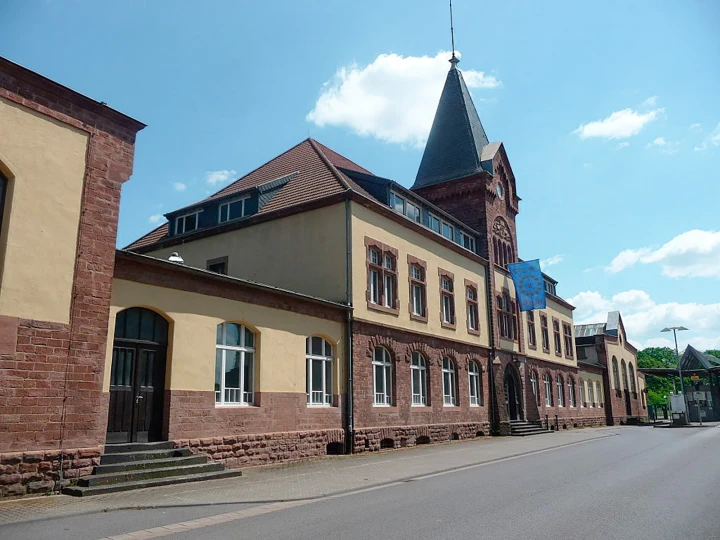
Das Verwaltungsgebäude des Bergwerks Velsen
The administration building of the Velsen mine.

What has disappeared

Some of these buildings no longer exist today: The Velsen settlement and the passenger station have disappeared, as has the Gustav 1 shaft frame. The smelting works and the mine station lie fallow. The boiler house and cooling tower gave way to the modern waste disposal facility AVA Velsen.

What remains

Other buildings still stand today - some in new use, others as industrial wasteland. The site thus presents a unique mixture of past and present.

Surroundings and neighborhood

The Rosselaue, a biotope and nature reserve created by mining, borders the site to the west. To the east is Petite-Rosselle (France) with the neighboring St. Charles mine - another historic site of the Lorraine-Saarland coal mining industry.

Today's ensemble

Today, the Velsen mine ensemble consists of old Prussian mining architecture, functional buildings from the 1930s such as the switch house and modern architecture (adventure mine, AVA). It combines decommissioned, converted and still active buildings. The historic entrance gate is the coffee kitchen.

Coffee kitchen Velsen

The oldest, original coffee kitchen in Saarland!

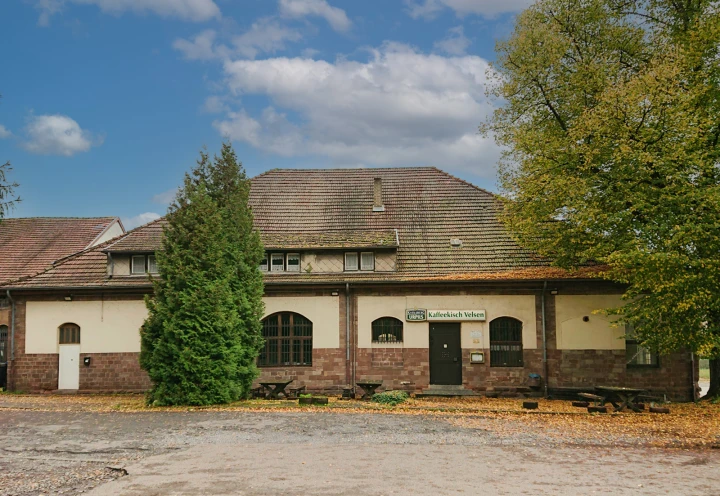
Die Kaffeküche von außen

There was always a canteen attached to the Saarland coal mines, the so-called coffee kitchen (Kaffeeküch or Kaffeekisch for short). Coffee was served here as well as snacks, especially the so-called miner's portion (Lyoner, Weck, mustard). Of course, beer was also served. All at very moderate prices.

The original gatehouse with its hipped roof dates back to the Prussian mining era in Saarland (1907), as do the former horse stables next to it. The former gatehouse has housed the Velsen coffee kitchen for over 60 years.

In Velsen, the last coffee kitchen in Saarland had been in operation virtually unchanged since the 1960s until recently. Elke Orth and her team looked forward to welcoming guests. Many tradesmen and drivers used the coffee kitchen as a place to take a break - not least the refuse collectors, many of whom drove to the nearby AVA Velsen waste incineration plant every day.

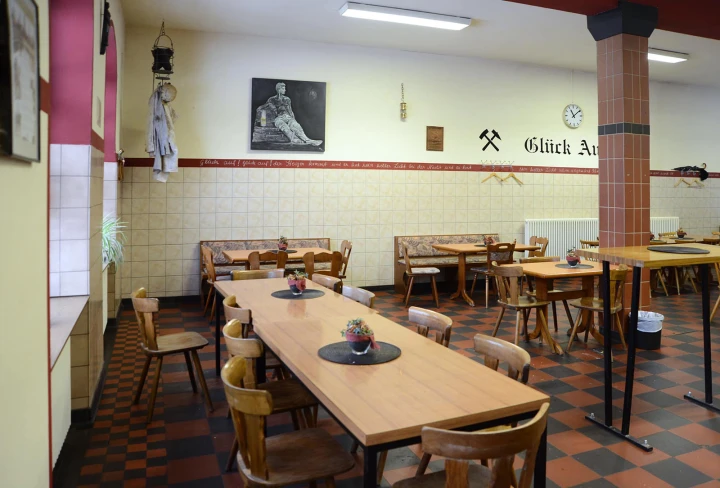
Die Kaffeküche von innen
A look inside the “Kaffeekisch”
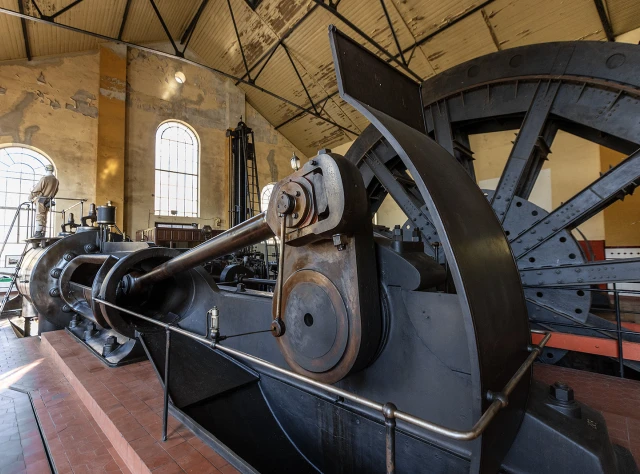
The Gustav II North winding machine

The oldest preserved winding machine in the Saar mining industry

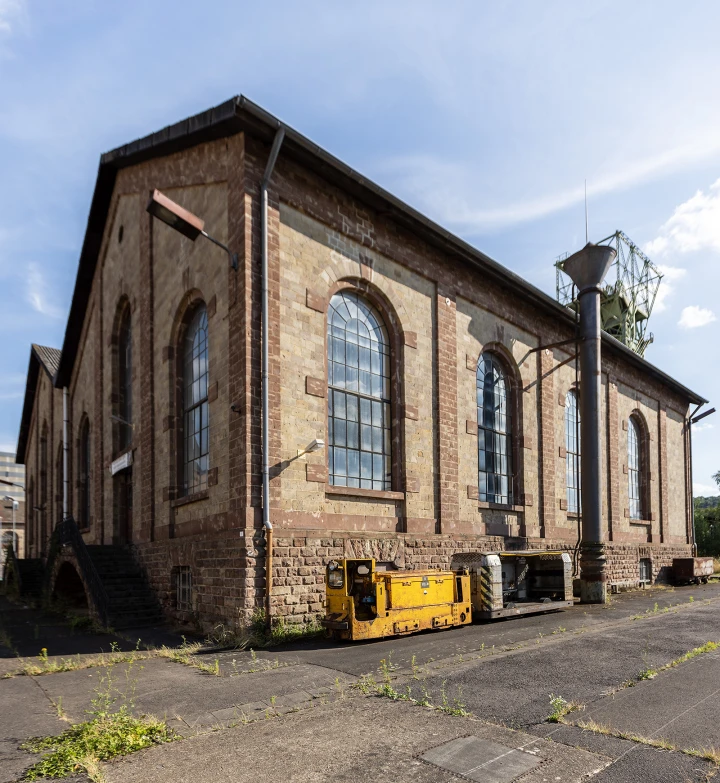
Fördermaschinenhaus Gustav 2 von außen
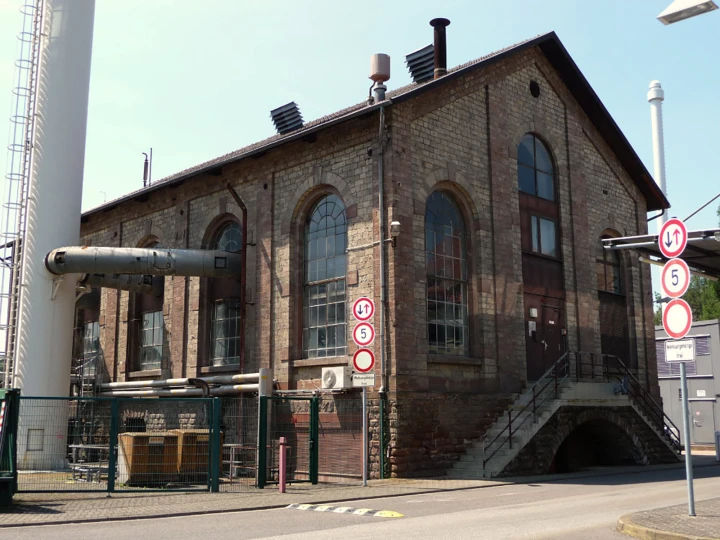
The hoisting engine house of the steam engine Gustav II

The Gustav shaft II is double-trunked, i.e. there were two independent ropeways next to each other, which is why the winding engine house is also a double building. The Gustav II (north) steam engine from 1916 is in excellent condition, the engine for the south tower was unfortunately scrapped.

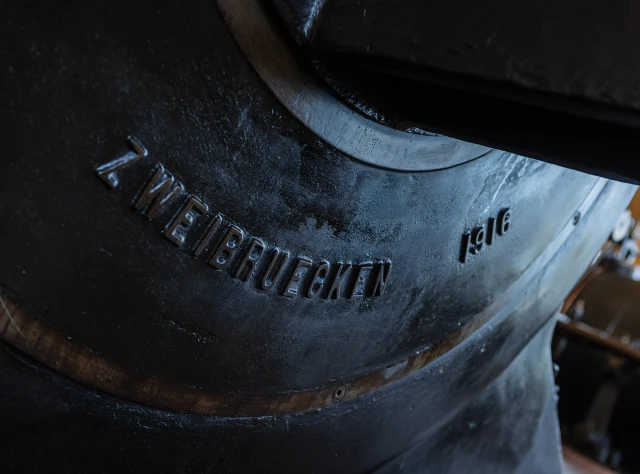
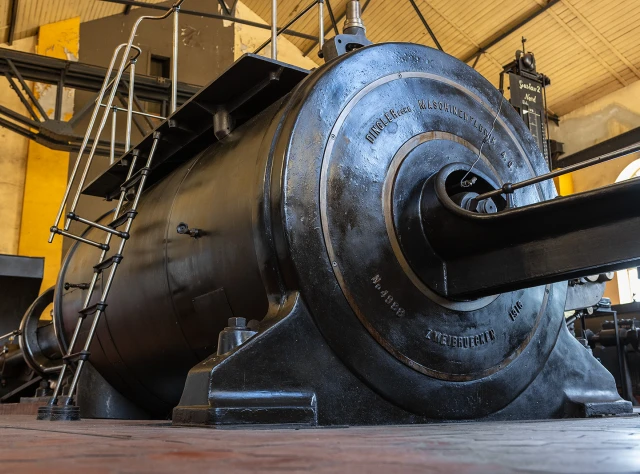
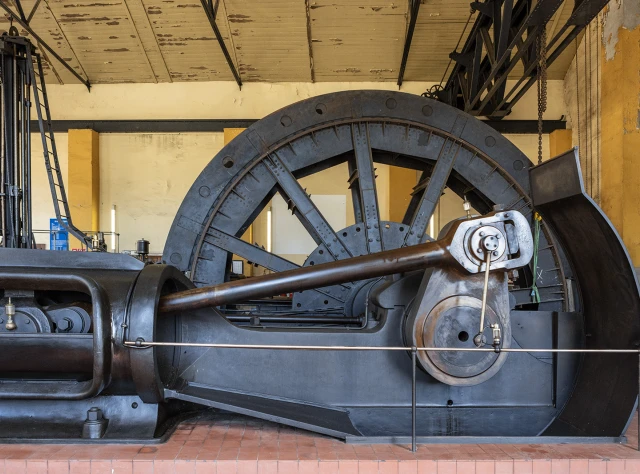
The steam engine is the oldest surviving winding engine in Saar mining. Built by Dingler'sche Maschinenfabrik Zweibrücken, it was in continuous use from 1916 until the final closure of the Velsen mine, also as a secondary shaft installation in 2005. In 1936, it was converted from drum operation to Koepe driving pulley. In its final years of operation, it no longer ran on superheated steam but on compressed air, as the boiler house for steam generation had to make way for the construction of the Velsen waste incineration plant. However, converting to compressed air was cheaper than converting to an electric hoisting machine.

Ein Detail der Fördermaschine Gustav 2
Die Fördermaschine Gustav 2

The oldest steam hoisting machine in Saarland at Gustavschacht 2 of the old Velsen mine was maintained and preserved for many years by the Berg- und Hüttenleute Warndt e.V. (Warndt Mining and Metallurgy Association) on a voluntary basis. The association deserves great recognition for this long-standing commitment.

Since 2025, the Erlebnisbergwerk Velsen e.V. has taken on this important task and ensures that this unique technical monument is preserved. Visitors now have the opportunity to experience the historic machine up close.

We highly recommend discovering this extraordinary piece of Saarland mining culture - ideally in combination with a visit to the Velsen adventure mine.

The Gustavsschacht

Two shafts, one story: Gustavschacht I and II

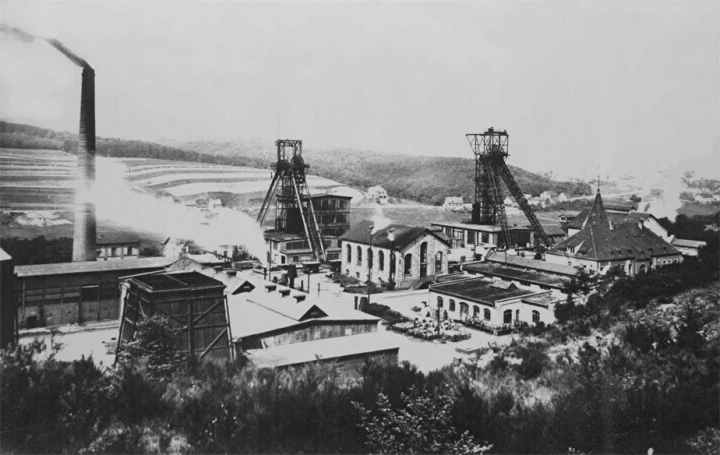
Historisches Bild der alten Grube Velsen

There are actually two of them. Gustavschacht I and Gustavschacht II. The history of the Gustavschacht begins in Geislautern. The historic Geislautern mine was located on Rotweg, where the Warndtgymnasium now stands. Towards the end of the 19th century, the coal reserves of the Geislautern mine that could still be mined were largely exhausted. Test drillings finally found rich coal seams in the Rosseltal valley.

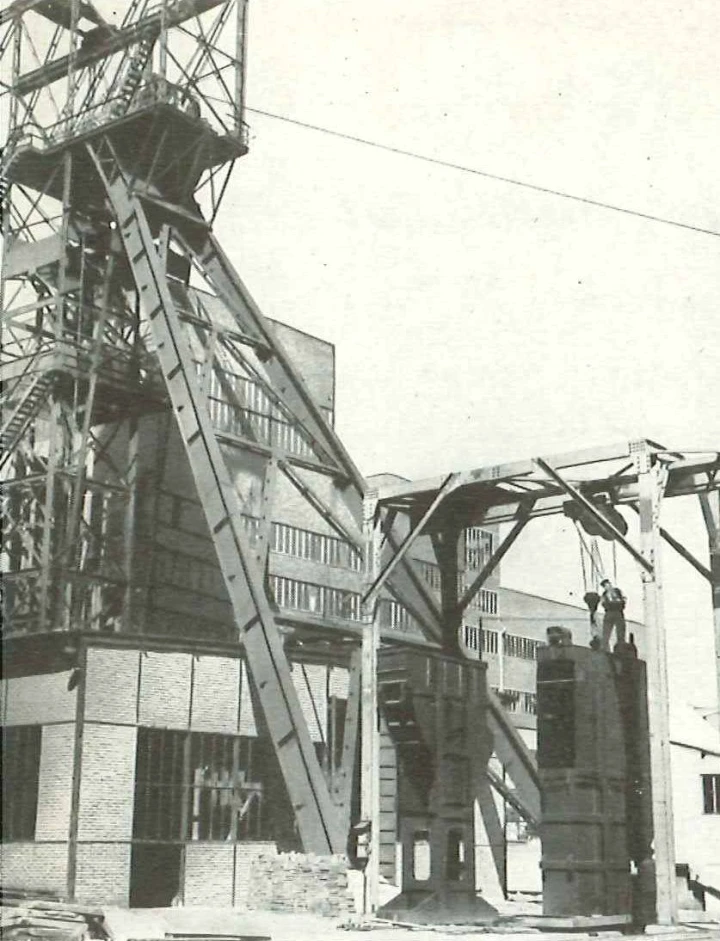
The experimental shaft II near Kleinrosseln eventually became the Rosselschacht, sunk in 1899, which also marked the start of the Velsen mine. Initially constructed using a wooden frame, an iron strut frame was then erected in 1906. There was a main and a secondary center, which explains the somewhat strange shape of the shaft frame - the hoisting machine for the secondary center stood at right angles to the machine in the main center.

Finally, in 1907, the mine was renamed "Gruben Velsen" in honor of Chief Mining Captain Gustav von Velsen, and the Rosselschacht became the Gustavschacht (later Gustavschacht I).

It reached its final depth in the years 1937-1939, when it was sunk to the 5th level at a depth of 843m. In 1958, the shaft was converted to skip hoisting, i.e. there was no longer a pit cage with wagons but a large "skip" vessel that was filled with coal underground and emptied above ground. This significantly increased the capacity. This shaft was finally filled in 1978 and the scaffolding was demolished shortly afterwards.

Der Förderturm Gustav 1
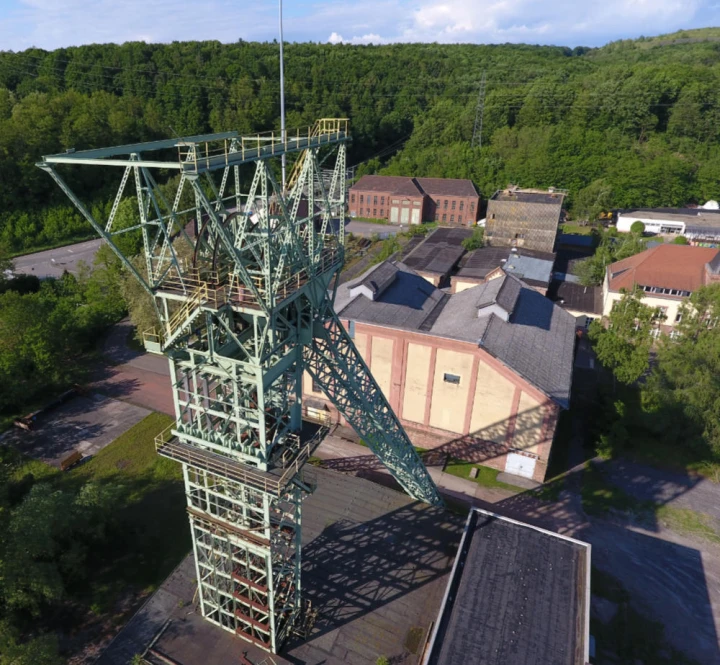
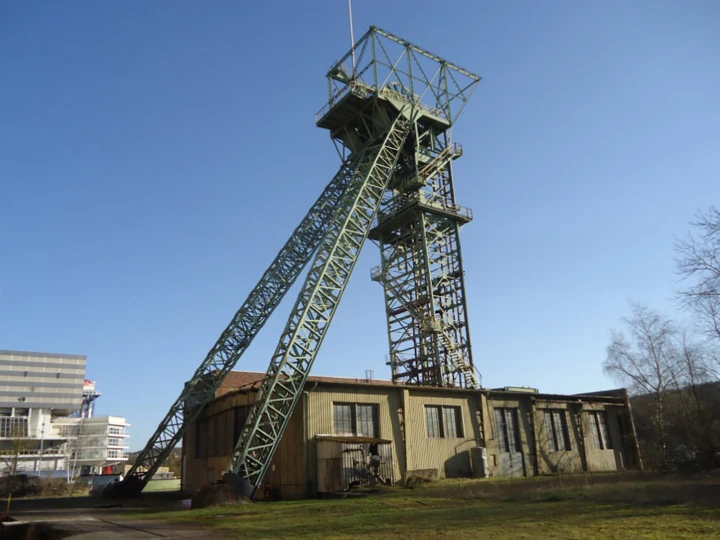
Der Förderturm Gustav 2

Gustavschacht II: From the Anna shaft to the mine of the century (1913-2005)

The mine was planned as a two-shaft mine from the outset and so in 1913 work began on sinking the Anna shaft (after the late wife of Gustav von Velsen), which was to be called Gustavschacht II from 1920. It was built with two equally large towers and a matching double winding engine house with two steam engines. The iron longwall framework was completed in 1917. Since then, the Gustavschacht has been in uninterrupted operation - first until coal mining in Velsen ceased in 1965 - and then as a ropeway, material and ventilation shaft for the Warndt mine until 2005. Many of the guides of the adventure mine went in and out of the Gustavschacht every day during their active time.

Other historic buildings

Fördermaschinenhaus des Schachtes Gustav I
The former hoisting engine house of shaft Gustav I.

The winding engine house of Gustav I shaft

The winding engine house of the Gustav I shaft (Rosselschacht), which no longer exists, around 1915.

The Gustav II headframe (1916)

The Gustav II shaft hall and the adjoining electric machine room are not listed but have nevertheless been preserved.

Das Fördergerüst Gustav II
Das Schalthaus von außen

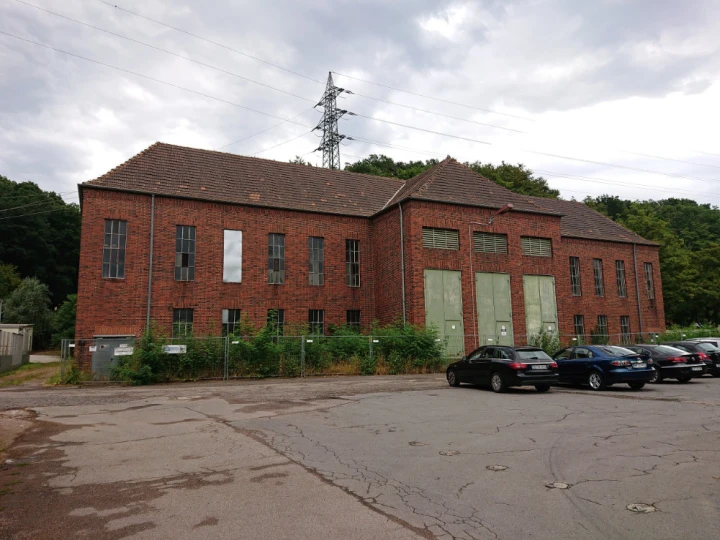
The electrical control center

The electrical control center from the 1930s.

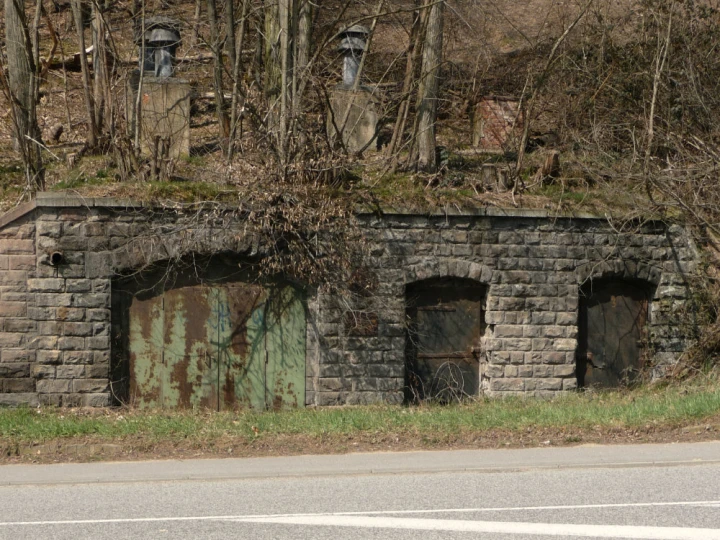
Oil and explosives cellar

Oil cellar (picture) and explosives cellar of the Velsen mine.

Der Ölkeller von außen
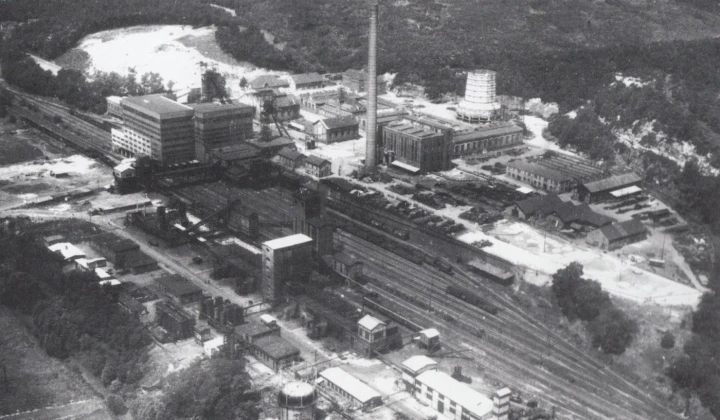
Historische Luftaufnahme des Bergwerks Velsen
The former mine railway station from a bird’s-eye view

The mine station

Site of the mine station (left of the railroad) and the smelting works (right of the railroad).